Numbered aid requests
What, for whom, by when — with category, priority and attachments.
An aid request is recorded, its budget approved and an owner named. The community sees the outcome, while the privacy of the person helped is protected.
The will to help is always there. What's missing is a record and follow-up.
A need comes up at a meeting; later nobody remembers who took it on or how much was spent.
The need gets a number; its owner, budget, date and status are visible at any time.
I donated, but I never found out whether the help actually arrived.
Requests that were met and the amount spent are open to the community; the recipient's name is visible only to authorised people.
A member or the board writes it down: what is needed, for whom, by when. Photos or documents can be attached.
An authorised person approves the estimate; spending comes out of the aid fund or general budget and goes into the books.
The job goes to one person or a volunteer team and can be split into tasks. Nobody is left assuming someone else has it.
Once met, the request is closed with the amount spent and a note. The community sees what was done; personal details stay private.
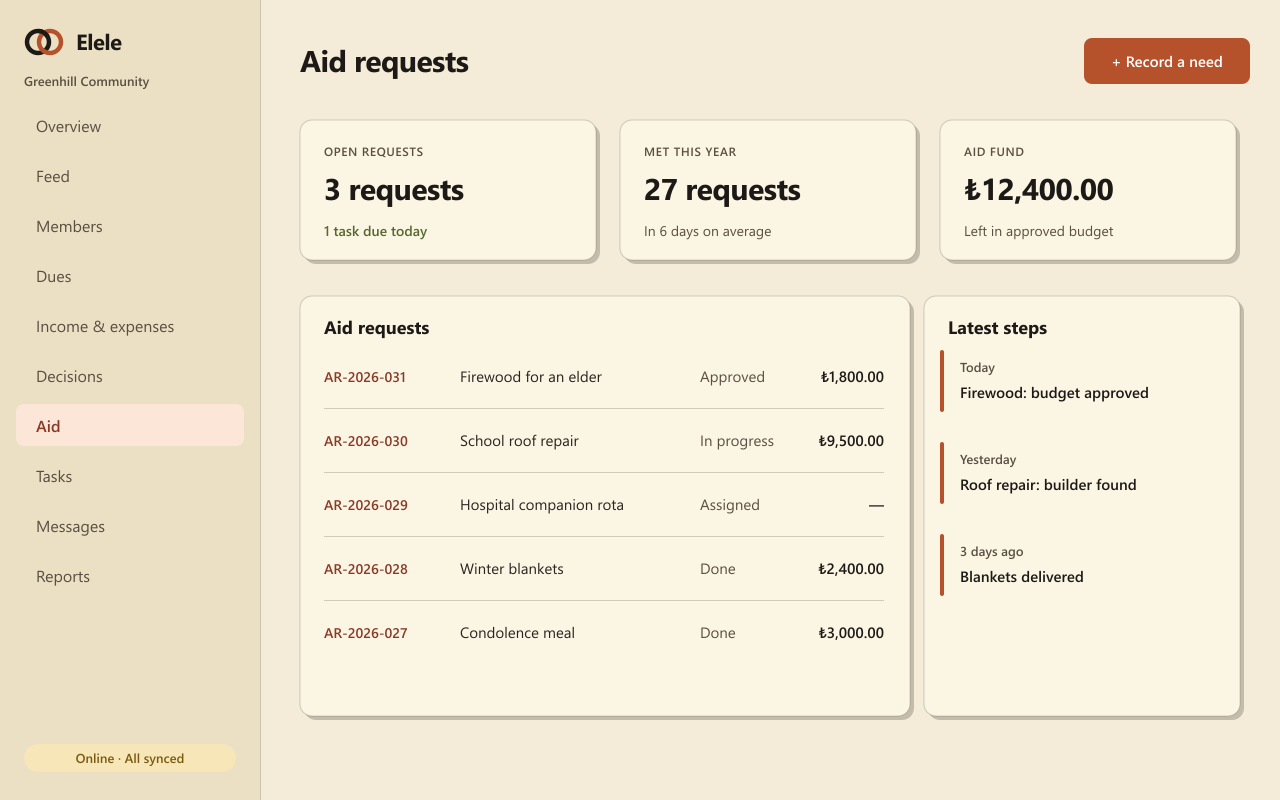
What, for whom, by when — with category, priority and attachments.
Estimates are approved by an authorised person; spending links to the books.
One person or a team takes it on; volunteers sign up to help.
Open, approved, in progress, met — overdue requests get a reminder.
The recipient's name and details are visible only to authorised roles.
Requests met and the amount spent feed into the activity report.
They all draw on the same member list and the same records, so what you enter once is ready everywhere.
Every job has an owner, a due date and a status; projects move step by step.
Dues plans, collections, numbered receipts, cash and bank, and a double-entry ledger.
Income and expenses, balances, receivables and activity reports, ready for the AGM.
No. Names and personal details are visible only to the roles you authorise. The community sees the type of need, its status and the amount spent.
The board can, always. You can also let members report needs; the request opens once it is approved.
Yes. Spending from an approved budget goes into the ledger as an expense and is linked to the request, so reports trace it from both sides.
Set up your community and record the first need, with an owner and an outcome.